
your guide to working with an interior designer
A successful interior design project is about so much more than choosing beautiful finishes and furnishings. It’s about creating a home that feels right for the people who live in it, supports the way they move through their days, and reflects their personality in a way that feels entirely their own.
Working with an interior designer is a collaborative process, and like any good partnership, it works best when there is trust, open communication, and a shared understanding of what you hope to achieve. From establishing a realistic budget to navigating decisions along the way, a little preparation and an understanding of the process can make all the difference.
If you’re considering working with an interior designer, here are a few important things to keep in mind to help make the experience as rewarding as your finished home.
Source: Candace Plotz Design
personal priorities
Before even thinking about paint colours, fabrics, or furniture, it’s important to consider how you want to live in your home.
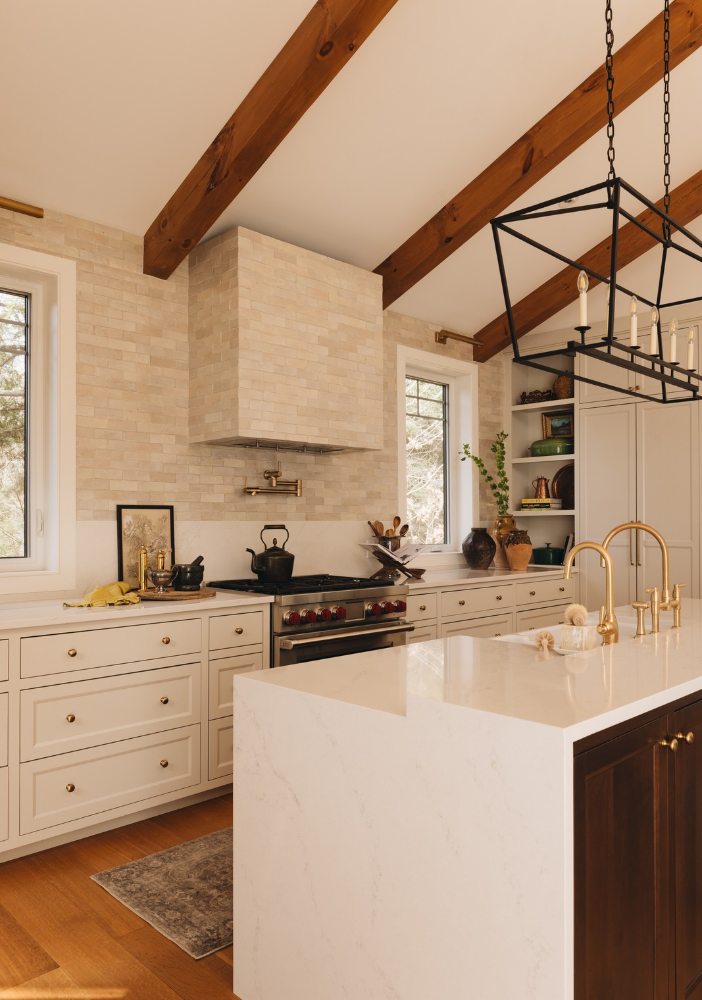
During the early stages of our process, we’ll ask questions about your lifestyle, daily routines, and how you use your space. We’ll explore what’s working well, what isn’t, and what you’d like to see change. Whether it’s improving the flow of your kitchen, creating more functional storage, or making your living spaces feel more inviting, these conversations help us understand what matters most to you.
Inspiration images are a wonderful place to begin, too. As you come across spaces that catch your eye, take note of what you’re drawn to. Is it the warmth of the materials, the architectural details, the colours, or the overall feeling? You don’t need to have all the answers. Part of our role is to help you make sense of those preferences and translate them into a cohesive design.
The goal is to create a home that not only reflects your personal style, but also supports the way you live every day. The most successful designs consider how a home looks, of course, but just as importantly, how it feels and functions for the people who call it home.
Source: Candace Plotz Design
budgeting basics
Budget is one of the most important conversations to have and something we discuss very early on. Being open about your overall investment, priorities, and financial comfort zone allows your designer to develop a plan that is both beautiful and realistic.
It’s also important to understand what that investment needs to cover. Depending on the scope of your project, this may include design fees, furnishings, materials, construction labour, lighting, window treatments, and other associated costs. Having a clear understanding of the full picture from the outset helps establish realistic expectations and allows decisions to be made with the bigger picture in mind.
Your designer can help determine where to allocate your budget for the greatest impact. Not every element needs to carry the same investment, and knowing where to prioritize can make a meaningful difference to the finished result.
Just as importantly, be open if your circumstances or priorities change. A significant adjustment to the budget can affect more than individual selections. It may influence the design direction, available options, scope of work, and project timeline. The earlier these conversations happen, the more opportunity there is to work through the implications together.
Source: Candace Plotz Design
trust & transparency
One of the most rewarding parts of working with an interior designer is having someone bring a fresh perspective to your home. You may arrive with a clear vision, a collection of inspiration images, and a good sense of what you like. Your designer's role is to take those ideas, understand what resonates with you, and interpret them into a cohesive design that feels personal rather than simply replicated.
That requires collaboration, but it also requires trust. Be open to ideas that may fall outside your initial comfort zone, and give yourself time to understand the thinking behind a recommendation before dismissing it. Your designer brings professional experience, years of technical knowledge, and an understanding of how individual decisions work together, often anticipating considerations that may not be immediately apparent.
It’s equally important to understand the process itself. Interior design involves much more than the selections you see in a presentation. There is planning, research, sourcing, documentation, coordination, and a great deal of consideration behind the finished space.
Clear communication makes that process easier for everyone. Share your feedback honestly and be mindful of approval deadlines. When decisions are delayed, the effects can extend beyond the immediate selection, particularly when materials need to be ordered or trades are scheduled. Changes to previously approved decisions can also introduce additional costs and affect the timeline.
behind the design
You don’t need to have all the answers before your first meeting. In fact, discovering what works best for you is part of the process. Your designer is there to help you make sense of your ideas, ask the right questions, and bring a considered vision to life.
A beautiful inspiration image is a starting point, not the whole story. It rarely reveals the dimensions, construction details, materials, or practical considerations that make a particular space work. Your designer will look beyond the photograph to understand what can be adapted to your home and what will make the design uniquely yours.
Every decision is connected, too. Changing one finish, fixture, or layout detail can influence several others, which is why the planning stage is so important. Changing your mind is understandable, but revisiting an approved decision during construction can be more complicated and costly than it may seem.
And finally, some of the most important work is the work you may never notice. The carefully considered layout, the cabinetry that conceals everyday necessities, the electrical being placed exactly where it’s needed, and the details that allow a room to feel effortless all require time and expertise. Often, it is this behind-the-scenes work that makes a finished space feel so natural.
Ottawa Interior Design | Ottawa Designer | Custom Home Builders | Petawawa | Ottawa | Renfrew | Calabogie | Pembroke | Ottawa Valley Designer | Ottawa Decorating | Vintage Home | Custom Home Design | Toronto | Montreal | Ottawa Valley Home Build | Home Design | Muskoka | Interior Decorating | Interior Design Tips | Designer Tips | Renovation Tips | Montreal Interior Design | Design Guidance | Interior Designer | Toronto Interior Design | Work With A Designer | Prince Edward County | Home Designer | Planning Your Project | Ottawa Valley Designer | Interior Decorating | Home Renovation |